Verified in real life

Real still matters. Now you can prove it.

Proof you were really there. Proof a real person filmed this. Proof it was captured live. Proof it’s in your hands right now. Proof you filmed it yourself.

Live captureReal personPrivacy firstAnchored on Solana

AI can fake a video in seconds. vIRL proves a real person captured yours live, in the moment, not pre-recorded and not a replay. Anyone can check the proof, and your video never leaves your phone.

Working prototype. Runs in your browser on iPhone or laptop.

01  Capturing live…
↻ Replay
REC00:00:144K·60
25.7617° N  80.1918° W
Live capture · on device● LIVE
sha256 7af3…e91c · live:✓
#000
#000
#000
#000
#000
SOLANA · devnet · immutable timestamp

Anchored & tamper-evident

devnet · block 297,441,082
Captured live · unchanged since anchor
Moments vIRL'd on devnet
live · devnet
5
Binding layers in the engine
0 bytes
Of your raw media ever on chain
0–4
Verification levels

The problem

Seeing is no longer believing.

Generative media can fake a face, a voice, or a whole scene in seconds. The tools we have prove where a file came from, not whether the moment was real. That gap is where fraud lives.

Anyone can fake a face

Deepfakes are cheap, fast, and good enough to fool a screen. A convincing video is no longer evidence of anything.

A "verified" file can still be fake

Tools that tag a photo or video can show the file was not edited after the fact. They cannot show that what is in it really happened. Point a camera at a deepfake playing on a screen and you still get a clean, signed file of something fake.

Trust does not scale

Manual review is slow and subjective. Verification has to be something a machine can check and anyone can audit.

See it in action

Capture, prove, share.

No wallet, no setup. Watch a real capture, from live moment to shareable proof.

Turn your sound on for the walkthrough, or use the mute button in the player.

LiDAR depth, live

Why filming a screen doesn’t work. On a depth-capable phone, vIRL checks the scene is really three-dimensional before it will issue a proof.

Flat screen — blocked. Point it at a video playing on a screen and the depth check reads a flat plane and stops. No proof is issued.
Live 3D scene — passes. The same check confirms real depth in front of the lens, and the capture earns its proof.

Verified in the wild

Real moments, checkable by anyone.

Captures people made and shared. Every card links to its live on-chain proof, so you don't have to take our word for it. Open any one and check it yourself.

Where it matters

Proof for moments that matter.

vIRL proves the capture was live, a real person in the moment. What you do with that proof is up to you.

Insurance & claims

Document damage the moment it happens. A live, time-stamped record you can hand an adjuster, not stock or recycled footage.

Buying & selling

Show the item is in your hands right now, captured live, not a saved or downloaded photo.

Journalism & eyewitness

Prove footage was shot live, by a real person, not recycled or a pre-recorded clip.

Real person, real profile

Prove there’s a real, live human behind the account, not a stolen photo or a pre-recorded clip.

How it works

Five layers of truth.

One real event, witnessed five independent ways. A faker can spoof a single signal, never all five agreeing at the same instant, under a challenge nobody could predict. Two layers are hard gates; the more that agree, the higher the level. The proof carries fingerprints only, never your media.

The event
One live capture Recorded in-app, in the moment, with a random challenge fired mid-capture that no pre-recording can answer. live · on device
Five independent checks
Motion ↔ videoFootage moves exactly with the phone’s motion sensors.
defeats stapled deepfakes
Challenge responseAnswers a random live cue at the right millisecond.
● gatedefeats replays & pre-records
Depth livenessThe scene is 3D (LiDAR depth), not a flat screen.
● gatedefeats screen / green-screen
Pulse coherenceFace pulse matches the paired heart sensor, live.
defeats impersonation
Temporal consistencyClocks line up; nothing spliced or back-dated.
defeats doctored logs
The levels
L1
Livecaptured live, software-checked
L2
Verified devicegenuine app, real device
L3
Verified scenereal 3D depth, attested sensors
L4
Fully attestedfull attestation, pro grade
The more checks that attest, the higher the level. Both gates must hold to verify; if either fails, the proof is flagged. Web captures reach L1; higher levels need the native app and hardware attestation.

Fakes can copy one signal. Not five, all agreeing at the same instant, under a challenge nobody could predict.

A network, not a vault

Anchored on a public chain, checkable from anywhere.

Each proof is anchored on a public chain, written to validators around the world, so it can't be quietly changed and vIRL can't forge or alter it. Anyone can recompute the hash and check it against the public anchor. No account needed.

N. VirginiaLos AngelesFrankfurtLondonTokyoSingaporeSão PauloSydney
0ways to alter a proof
<1sto check a proof
Publicon-chain anchor

The output

Proof you can see.

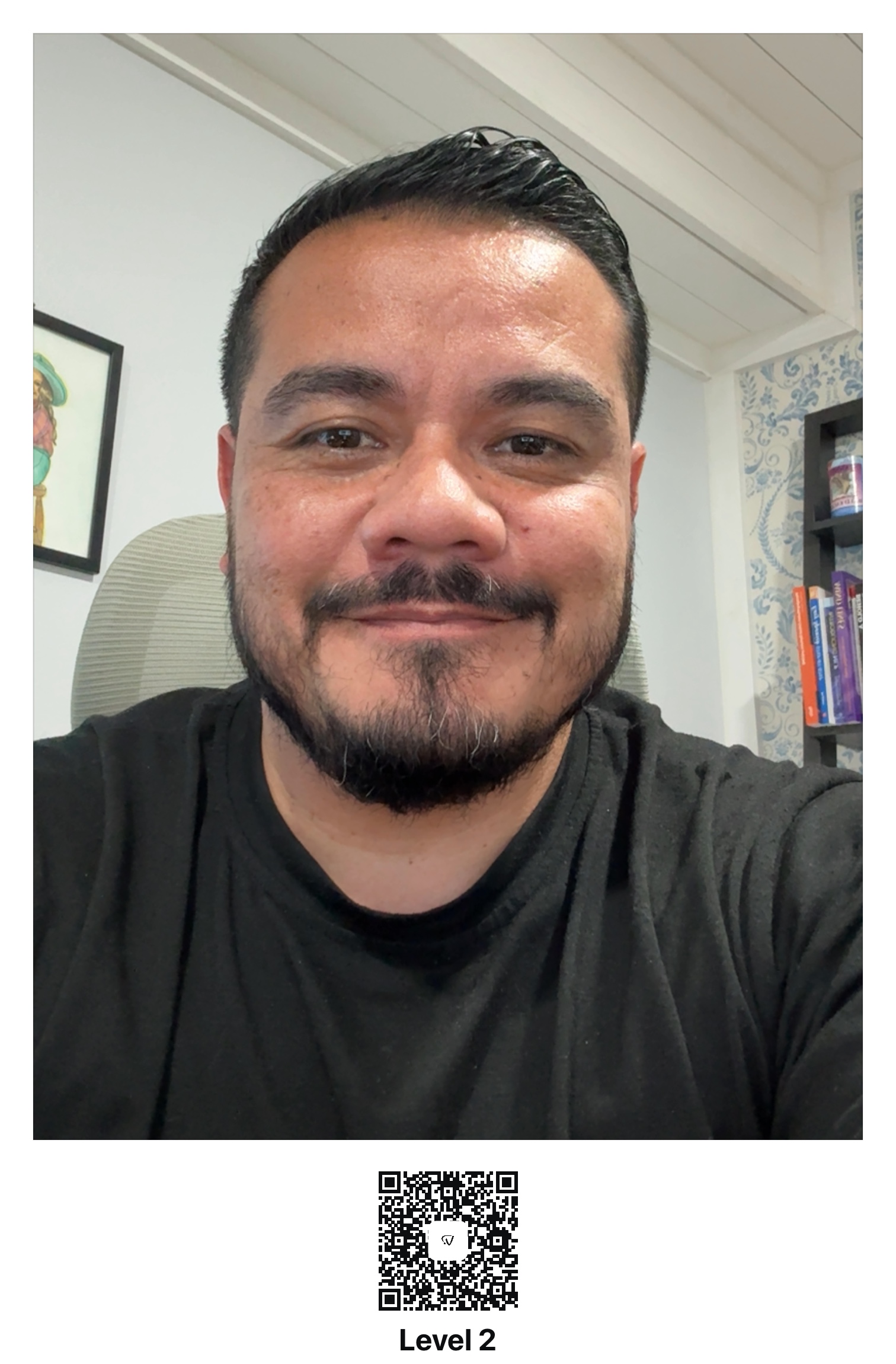
When a capture verifies, vIRL stamps a clean credential onto the photo or video and anchors its fingerprint. The mark travels with the file, and anyone who sees it can open the full proof to check that it was captured live, by a real person, and has not changed since.

  • A clean keepsake frame with a scannable QR, not a watermark slapped across your photo.
  • Carries the verification level and date, backed by the on-chain proof.
  • Saves straight to your photo library, ready to share.
A real vIRL keepsake: captured live, stamped with the vIRL mark and a scannable QR that opens the on-chain proof.

Real capture, verified on devnet. Scan the QR to open the proof.

Honest status

What works today, and what is next.

This is an early prototype. We would rather show you exactly where the line is than pretend the whole vision already ships.

Working in this prototype Live

  • Live liveness capture using phone motion and the camera.
  • Random challenge that blocks pre-recorded and replayed clips.
  • Real SHA-256 proof manifests generated on the device.
  • On-chain anchoring of the proof hash to Solana devnet, with a shareable transaction link. vIRL sponsors the fee, so no wallet is needed.
  • Open verifier page that reads a real anchored proof back off-chain.
  • Open-source verification core, Apache-2.0: the proof format and a runnable verifier are public, so anyone can check our work. View the code →
  • English, Spanish, and Italian for testers.

Try it now

Prove your next moment.

Capture a live moment in your browser, or open the verifier to see how a proof is checked.

Live capture

Patent pending. US provisional 63/948,969. Raw media and biometrics never touch the chain.

FAQ

Common questions.

How do I prove a photo or video is real?

Capture it with vIRL. vIRL proves a real person recorded your photo or video live — in the moment, not pre-recorded or replayed — and anchors a tamper-evident fingerprint so anyone can verify it wasn't AI-generated or edited.

Is vIRL deepfake detection?

No. Detection guesses whether media is fake and gets weaker as AI improves. vIRL proves authenticity at the moment of capture instead — a cryptographic proof that a real person filmed it live, which stays valid over time.

Does vIRL work for video, or just photos?

Both. vIRL proves a real person captured your photo or video live, in the moment.

How can someone else verify my proof?

Anyone can check a vIRL proof independently. The fingerprint is anchored on-chain, so verification doesn't require trusting vIRL or the person who captured it.

Does my photo or video leave my phone?

No. Your media stays on your device — vIRL anchors only a fingerprint of it, so you keep your privacy while still being able to prove it's real.